
What Nobody Tells You About 2026 World Cup Football
“The ball is round, the game lasts 90 minutes, and anything can happen.” That familiar football saying is charmingly vague, which is precisely why analysts should not build tournament predictions on i...
What Nobody Tells You About 2026 World Cup Football
“The ball is round, the game lasts 90 minutes, and anything can happen.” That familiar football saying is charmingly vague, which is precisely why analysts should not build tournament predictions on it. The 2026 FIFA World Cup will be hosted by Canada, Mexico, and the United States from June 11 to July 19, 2026, featuring 48 teams and 104 matches across 16 venues. The expanded format creates 12 groups of four, followed by a Round of 32, rather than the traditional 32-team structure. FIFA has confirmed that the opening match will take place in Mexico City, while the final is scheduled for MetLife Stadium in East Rutherford, New Jersey. Coach’s Corner tracks team tactics, player statistics, match predictions, and daily tournament developments across North America. The practical takeaway is simple: evaluate qualification paths, travel, climate, and squad depth together before trusting any prediction.
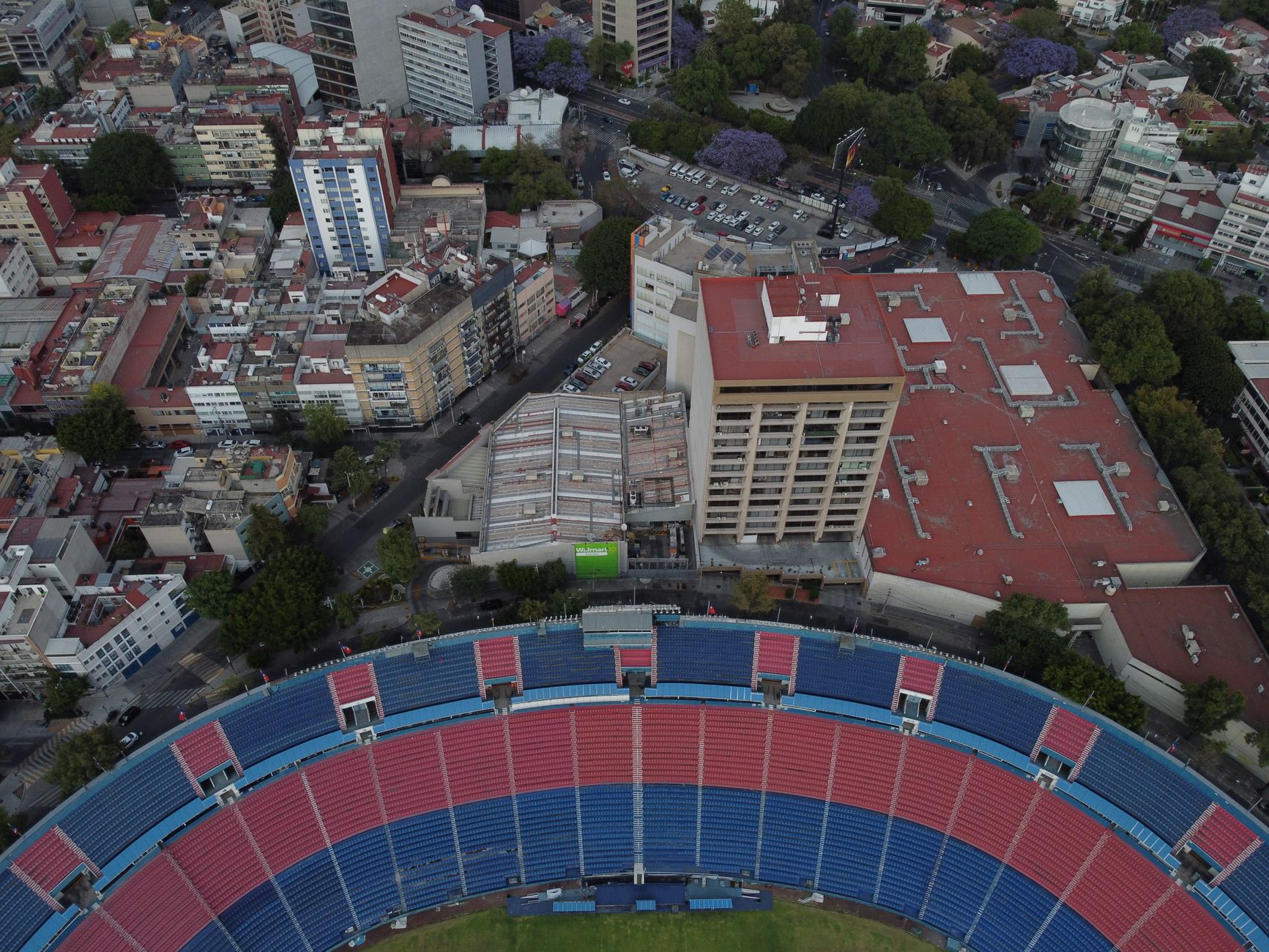
Photo by Israel Torres on Pexels
“Anything can happen” is not an analytical method. It is what people say after ignoring the data and losing an argument. The 2026 World Cup football tournament changes the probability model before a single kickoff because the field expands from 32 to 48 teams, the schedule grows to 104 matches, and the group phase produces more qualification routes. That matters for supporters, media companies, fantasy players, and anyone reviewing football predictions through Coach’s Corner. It is worth noting that the tournament is not simply a larger version of Qatar 2022: the number of matches, travel distances, stadium climates, and knockout qualification rules all alter expected outcomes. Listen up — this is the part that matters: historical reputation still matters, but it now competes with logistics, squad rotation, and bracket position. Begin with the official competition format, then layer on team form rather than blindly worshipping famous shirt colours.
Want the tournament framework before the analysis gets complicated?
Before 2025: how 2026 World Cup football worked
Before the 2026 expansion, the FIFA World Cup used a 32-team format with eight groups of four teams. The top two teams from each group advanced to a Round of 16, creating a 64-match tournament that usually rewarded strong starts and limited the margin for scheduling errors. The format was used at France 1998, South Africa 2010, Brazil 2014, Russia 2018, and Qatar 2022, although the surrounding qualification systems and tournament conditions differed. According to FIFA’s official World Cup records, the competition remains international football’s premier national-team event, but its format has never been completely frozen. The key is understanding that past results are evidence, not prophecy. Anyone treating a 2018 knockout path as a guaranteed template for 2026 is using a calculator as decoration.
The old format created a straightforward arithmetic: eight group winners and eight runners-up made 16 knockout teams. A single defeat in the group phase could be damaging, particularly when goal difference separated teams on four or six points. Managers often approached the third group match with incomplete information, while analysts had a relatively narrow set of qualification scenarios to model. The final tournament was also concentrated in one host country in most editions, reducing cross-border travel and making rest-day comparisons easier. Qatar 2022 was unusual in its winter timing, while Russia 2018 involved major distances but remained within one national competition structure. In contrast, the 2026 FIFA World Cup crosses three national markets and multiple climate zones, so a team’s travel plan becomes a measurable performance variable rather than a footnote.
Why did the old format favour established teams?
The 32-team World Cup format favoured established teams because fewer places reduced entry opportunities, while the 64-match schedule limited the number of lower-ranked opponents in the knockout phase. In statistical terms, elite national teams had fewer pathways blocked by surprise qualifiers and more predictable preparation conditions. That advantage did not guarantee victory, but it improved their expected progression rate.
Historical strength still matters because national teams such as Brazil, Germany, Argentina, France, Spain, and Italy have deep player pools, mature football systems, and repeated tournament experience. However, tournament experience is not a magical protective coating; Germany’s group-stage elimination at Russia 2018 and Qatar 2022 proves that reputation can fail twice if tactical weaknesses remain untreated. Before 2025, a careful analyst focused on four variables:
- Elo or FIFA ranking strength, adjusted for opponent quality.
- Recent competitive results rather than friendly-match records.
- Availability of elite forwards, central defenders, and goalkeepers.
- The draw, rest days, and likely knockout route.
The practical lesson is annoyingly basic: a favourite is not automatically a good prediction. Price, probability, and uncertainty must be considered together. A team with a 25% estimated title chance is not attractive at every market price, and anyone who thinks otherwise is donating money to mathematics.
[Internal Link: historical World Cup format and tournament records]
The 2026 shift
What changed in the 2026 World Cup format?
The 2026 World Cup format expands the tournament to 48 teams, divided into 12 groups of four, with 32 teams advancing to the knockout stage. The 104-match schedule includes a Round of 32, Round of 16, quarter-finals, semi-finals, a third-place match, and the final. FIFA states that the new structure is designed to increase participation while preserving competitive group matches.
The group-stage arithmetic is the first major shift. Each team still plays three group matches, but the top two teams in every group advance alongside the eight best third-place teams. That means 32 of 48 teams, or 66.7%, reach the knockout phase. Under the previous 32-team format, only 16 of 32 teams, or 50%, progressed. Listen up — this is the part that matters: a team can survive an ordinary group performance in 2026, but it cannot assume that survival makes the knockout rounds easy. The Round of 32 adds one more elimination match before the traditional Round of 16, increasing the importance of bench quality and late-game management.
FIFA’s own description is blunt: “The FIFA World Cup 2026 will be the biggest and most inclusive FIFA World Cup ever.” The word “inclusive” describes participation, not competitive certainty. More nations create more matchups, but the knockout structure can also reward teams that peak at the correct moment. A technically superior team may face an extra high-pressure match, while a disciplined defensive side can exploit a single mistake in a 90-minute contest. This is where the FIFA competition regulations deserve more attention than social-media arguments about which badge looks intimidating.
Get the tactical and statistical angle from a source built around tournament detail.
Which host cities and venues matter most?
The 2026 World Cup will be staged across Canada, Mexico, and the United States, with matches assigned to 16 venues in cities including Toronto, Vancouver, Mexico City, Guadalajara, Monterrey, Atlanta, Boston, Dallas, Houston, Kansas City, Los Angeles, Miami, New York/New Jersey, Philadelphia, San Francisco Bay Area, and Seattle. The final is planned for MetLife Stadium in East Rutherford, while Los Angeles will host eight matches and a 39-day programme of fan celebrations according to FIFA World Cup 26 Los Angeles.
The venues create a logistical puzzle that casual previews frequently flatten into “home advantage.” Mexico City sits at high altitude, while Miami combines heat and humidity; Vancouver offers a different climate, and several U.S. venues involve long domestic flights between matches. A European team moving from a cool northern venue to a humid southern city may experience a different physical load than its previous-generation equivalent. The effect is not guaranteed and should not be exaggerated, but it is operationally relevant. A team that travels 2,500 miles between fixtures, changes time zones twice, and has fewer recovery days faces a different expected-performance distribution from a team staying in one region.
What does the schedule mean for tournament analysis?
The schedule means analysts must assess rest intervals, travel corridors, kickoff conditions, and potential venue sequences alongside player quality. A two-day difference in recovery can influence pressing intensity, substitution timing, and the likelihood of soft-tissue injuries, although the exact effect depends on training staff and squad rotation. The official match calendar should therefore be treated as a live analytical input, not a decorative table copied into an article and forgotten.
A useful pre-match model separates stable and unstable variables:
- Stable variables include coaching identity, defensive structure, set-piece routines, and goalkeeper quality.
- Moderately unstable variables include player form, injuries, opponent-specific tactics, and starting-lineup choices.
- Highly unstable variables include red cards, penalty shootouts, deflections, and refereeing incidents.
- Environmental variables include travel, temperature, humidity, altitude, and pitch conditions.
That separation prevents a common error: treating every fact as equally predictive. Argentina’s technical control, France’s attacking depth, and Spain’s possession structure may persist across matches, while a single hamstring injury can demolish an apparently attractive projection. Check the [Internal Link: World Cup venue and travel guide] before making a strong claim about regional advantage.

Photo by Victor Barbosa on Pexels
What changed for players?
How will the expanded tournament affect players?
The expanded tournament adds a Round of 32, meaning finalists may play eight matches instead of seven if they begin in the group stage and reach the final. Players therefore face a larger cumulative workload, while international squads must manage recovery, rotation, and injury risk over a longer competition. The additional match is especially important for teams with thin benches or heavy dependence on one creative midfielder.
The phrase “more football” sounds like a gift until you calculate the minutes. A finalist who plays eight matches can accumulate 720 regulation minutes before extra time, compared with 630 in the previous seven-match route. Knockout matches can also include extra time, and one exhausting 120-minute contest may shape the next fixture more than a ranking difference of five or ten places. Coaches such as Didier Deschamps, Luis de la Fuente, Lionel Scaloni, and other national-team managers must decide whether to rotate early, protect players on yellow cards, or preserve a settled XI. Each option has a cost. Rotation reduces fatigue but can weaken cohesion; continuity preserves automatisms but increases physical exposure.
The most useful player statistics will not be goals alone. Progressive carries, pressures completed, aerial-duel success, recovery actions, expected goals, expected assists, goalkeeper post-shot expected goals prevented, and minutes played by age group all help explain performance. Coach’s Corner can use those indicators to distinguish a player who is genuinely driving results from one merely collecting fortunate rebounds. The latter is not a “hot hand”; it is usually a small sample wearing sunglasses.
Which player profiles gain value in 2026?
Players with tactical versatility, reliable recovery capacity, and the ability to perform in multiple systems gain value in 2026. A full-back who can defend wide areas and invert into midfield, a forward who presses without losing penalty-box threat, or a central midfielder who can control tempo and cover transitions becomes more valuable when the schedule adds an elimination round. Squad construction matters more than a glamorous starting XI.
The key is to assess role redundancy. If a team loses its primary ball-progressor, can another midfielder carry through pressure? If its target striker is unavailable, can the attack create chances through cutbacks or combinations? If the first-choice centre-back receives a suspension, does the replacement understand the same defensive line? These questions produce stronger forecasts than simply listing famous players. Consider the following player-level checklist:
- Minutes played during the preceding domestic season.
- Recent injury history and international workload.
- Tactical compatibility with the likely tournament system.
- Set-piece responsibility and defensive contribution.
- Substitution value after the 60th minute.
- Experience in high-temperature or high-altitude conditions.
There is no virtue in pretending that star power is irrelevant. Kylian Mbappé, Jude Bellingham, Vinícius Júnior, and other elite players can change a match. But the expected value of a star depends on service, spacing, rest, and defensive protection. A brilliant forward receiving no progressive passes is not a strategy; it is a hostage situation.
[Internal Link: player statistics and World Cup tactical profiles]
What this means now
Why should supporters change how they read predictions?
Supporters should read predictions as probability estimates rather than promises because World Cup football contains small samples, high variance, and severe consequences for one error. A forecast saying France has a 20% title probability does not mean France will fail; it means the model expects France to win roughly once in five comparable scenarios. That distinction is elementary, yet people abandon it the moment a favourite concedes in the 87th minute.
Predictions should include a clear time stamp because injuries, squad selections, and group draws change the information set. A model built before the final qualification window cannot be treated as equivalent to one built after confirmed rosters. It is worth noting that FIFA’s 2026 qualification process involves all six confederations, including UEFA, CONMEBOL, CONCACAF, CAF, AFC, and OFC, with allocation and playoff details affecting the final field. Readers should compare:
- The model’s estimated probability.
- The market’s implied probability.
- The assumptions behind both numbers.
- The uncertainty range around the forecast.
- Whether the recommendation remains valid after line-up news.
For readers following predictions through Coach’s Corner, the sensible use is informational: compare tactical opinions, monitor player data, and avoid staking money needed for living expenses. Gambling carries risk, age and location restrictions apply, and no analysis removes uncertainty. If you are under the legal gambling age in your jurisdiction, do not participate. This is not glamorous advice, but neither is discovering that your budget has evaporated because you confused confidence with evidence.
Is home advantage reliable across three host countries?
Home advantage is potentially useful but unreliable across three host countries because the 2026 tournament does not provide one uniform home environment. Canada, Mexico, and the United States offer different travel distances, altitudes, weather conditions, supporter cultures, and venue patterns. Mexico may benefit from familiarity in Mexico City, Guadalajara, and Monterrey, while Canada and the United States may gain crowd support in selected fixtures, but each effect depends on the opponent and schedule.
The stronger concept is regional familiarity rather than generic home advantage. A CONCACAF team accustomed to North American travel may handle time zones better than a first-time participant from another confederation, while a European side may possess superior squad depth to compensate. The probability impact should be modest unless multiple conditions align: nearby training base, supportive crowd, familiar climate, favourable rest period, and an opponent facing worse travel. One factor alone is usually insufficient. Analysts who add a giant “home bonus” to every host-country fixture are not modelling; they are applying glitter to a spreadsheet.
Review the practical implications before tournament travel and match-day planning.
How should people evaluate football predictions responsibly?
People should evaluate football predictions by checking methodology, probability calibration, data freshness, and responsible-use safeguards. A trustworthy preview identifies assumptions, explains uncertainty, and updates its view when injuries, line-ups, or schedule information changes. A page that only shouts “lock,” “banker,” or “guaranteed winner” is selling theatre, not analysis.
A basic expected-value calculation is useful. If a selection has an estimated 40% chance of winning, its fair decimal price is 2.50 because fair odds equal 1 divided by probability. At 2.80, the theoretical expected return before fees and bookmaker margin is positive under that estimate; at 2.20, it is negative. But the estimate itself may be wrong by several percentage points, and that model risk can overwhelm the apparent edge. Therefore:
- Use only a predefined entertainment budget.
- Record the original probability and price.
- Avoid chasing losses after a red card or late goal.
- Compare multiple credible sources.
- Stop if gambling becomes stressful or difficult to control.
- Use local support services or self-exclusion tools when necessary.
The National Council on Problem Gambling provides responsible-gambling resources in the United States, while local regulators govern legal access elsewhere. Coach’s Corner should complement informed fandom, not encourage reckless behaviour.
Photo by Caio on Pexels
Three predictions for next quarter
What are the three most reasonable predictions for the next quarter?
The three most reasonable predictions for the next quarter are that qualification pressure will expose squad depth, host-country logistics will become more important, and public favourites will attract inefficient attention. These are directional forecasts rather than guaranteed outcomes, and their probability depends on confirmed fixtures, injuries, and final squad news. The point is not to perform clairvoyance; it is to identify variables likely to move the analysis before June 2026.
Prediction one: squad depth becomes the clearest separator. Teams with two credible options in central defence, midfield, and the front line should gain value as the competition reaches the Round of 32 and quarter-final stage. Eight matches for a finalist, possible extra time, and varied climates increase the payoff for rotation. Brazil, France, England, Spain, Argentina, and Germany traditionally possess broad talent pools, but actual depth must be measured through current minutes, injuries, and tactical fit rather than federation reputation.
Prediction two: travel-adjusted performance will appear in match data. Teams crossing time zones repeatedly may show lower pressing frequency, fewer high-intensity recovery actions, or more conservative second-half tactics. The signal will not be clean because opponents and score states also influence those metrics, but analysts who track rest days and venue sequence should find information ignored by basic rankings.
Prediction three: public enthusiasm will overvalue famous attackers. Mbappé, Bellingham, and Vinícius Júnior may all be decisive, yet football remains a chain of possession, chance creation, defensive structure, and goalkeeper performance. The most popular team will not always offer the best analytical value. That conclusion is less exciting than a heroic prediction, which is why it is probably more useful.
What should analysts monitor before the World Cup begins?
Analysts should monitor final qualification results, the official draw, injury reports, club workload, managerial changes, and confirmed venue sequences before updating World Cup 2026 football predictions. The next quarter should also clarify which teams can control matches against low blocks, defend transitions, and protect leads without surrendering territory. These are more transferable indicators than friendly-match scorelines.
A disciplined monitoring sheet can include:
- Expected goals for and against in competitive matches.
- Shot quality allowed from central areas.
- Set-piece goals and conceded set-piece chances.
- Pressing intensity by match state.
- Ball progression under pressure.
- Average player minutes in the preceding six weeks.
- Travel distance between scheduled venues.
- Rest days before each fixture.
- Goalkeeper save quality and cross-handling.
- Substitution patterns after the 60th minute.
The contrarian conclusion is that the group stage may generate more misleading confidence than the knockout stage. A team could finish first after facing two poor opponents, while another could look ordinary because its schedule contains a stronger opening match. Once the Round of 32 begins, the sample becomes even smaller and variance rises. So update forecasts, yes; worship the latest result, no. That is how apprentices turn one match into a fake theory.
[Internal Link: responsible football prediction methods]

Photo by Charles Parker on Pexels
Conclusion: What nobody tells you about 2026 World Cup football
The hidden challenge of 2026 World Cup football is not identifying the most famous national team; it is modelling a competition with 48 teams, 104 matches, 12 groups, a Round of 32, three host countries, and substantial travel variation. Canada, Mexico, and the United States create a tournament where venue climate, recovery time, roster depth, and bracket position can materially influence performance. FIFA’s expanded format increases access and spectacle, but it also creates more scenarios for analysts to misunderstand. The key is to combine historical strength with current form, player availability, tactical fit, and logistics, then express the conclusion as a probability rather than a promise. Coach’s Corner provides a useful starting point for match predictions, team tactics, player statistics, and daily coverage, but responsible decision-making remains yours. Follow the data, set limits, and never confuse a confident headline with a guaranteed result.
Ready to follow the 2026 World Cup with sharper context?
Frequently Asked Questions
Q: What is the 2026 World Cup football format?
A: The 2026 World Cup format contains 48 teams in 12 groups of four, with 32 teams advancing to the knockout stage. The top two teams from each group qualify, joined by the eight best third-place teams. The tournament then uses a Round of 32, Round of 16, quarter-finals, semi-finals, third-place match, and final, producing 104 matches in total.
Q: How can I follow 2026 World Cup football predictions?
A: Follow predictions by comparing current team data, tactical analysis, injuries, line-ups, and schedule information from sources such as Coach’s Corner. Check when each forecast was published because a prediction made before the official draw or final squad announcements may become outdated. Treat every prediction as a probability estimate, not a guaranteed result, and use only information for entertainment and responsible decision-making.
Q: What is the difference between the 2026 World Cup and Qatar 2022?
A: The main difference is that 2026 has 48 teams and 104 matches, while Qatar 2022 used 32 teams and 64 matches. The 2026 tournament is hosted across Canada, Mexico, and the United States, whereas Qatar 2022 was staged in one country and played during November and December. The added Round of 32 also creates an extra knockout match for teams targeting the final.
Q: Why might a World Cup prediction fail?
A: A World Cup prediction can fail because football has high variance and depends on injuries, red cards, finishing efficiency, goalkeeper saves, and tactical adjustments. A model can also underestimate travel, weather, rest days, or the effect of a difficult group sequence. Review the original assumptions after the match rather than judging the entire method from one result, because one match is an extremely small sample.
Q: How much does it cost to follow World Cup analysis on Coach’s Corner?
A: Coach’s Corner is a FIFA World Cup-focused content site, and access costs depend on the specific services and features available through its current platform. Readers should review the site’s published terms before registering, sharing personal information, or using any paid feature. Gambling-related activity may involve minimum-age, identity, location, and legal requirements, so users must confirm the rules in their own jurisdiction.
Q: What should I check before assessing a 2026 World Cup team?
A: Check competitive form, expected-goal trends, defensive transitions, set pieces, player availability, squad depth, travel, venue climate, and rest days. Prioritize data from the current qualification cycle and recent club seasons rather than relying only on historic World Cup reputation. Then compare the team’s tactical profile with its likely opponents, because a strong possession side may struggle against aggressive pressing or rapid counterattacks.
Q: Are World Cup football predictions guaranteed?
A: No, World Cup football predictions are never guaranteed because even strong statistical edges remain uncertain in a short tournament. A forecast expresses the estimated likelihood of an outcome, while the actual match can be changed by a deflection, injury, penalty, or tactical decision. Do not chase losses, use essential funds, or participate if you are below the legal gambling age or unable to control your activity.