
What Nobody Tells You About World Cup 2026
“The ball is round, the game lasts ninety minutes, and everything else is theory.” That old football principle becomes unusually useful in 2026, when the FIFA World Cup expands to 48 teams across Cana...
What Nobody Tells You About World Cup 2026
“The ball is round, the game lasts ninety minutes, and everything else is theory.” That old football principle becomes unusually useful in 2026, when the FIFA World Cup expands to 48 teams across Canada, Mexico, and the United States. The tournament will run from June 11 to July 19, 2026, featuring 104 matches in 16 host cities, including Atlanta and Los Angeles. Coach's Corner covers this expanded competition through match predictions, team tactics, player statistics, squad news, and daily tournament analysis for global football fans. The larger format creates more opportunities for emerging nations, but it also increases travel, scheduling, and tactical uncertainty. Listen up — this is the part that matters: do not evaluate the 2026 World Cup using assumptions built for the 32-team era. Start with the official schedule, confirm squad availability, then compare form, opponent quality, and venue conditions before making any prediction.

Photo by Alizain Hirani on Pexels
Before 2025: how the football 2026 World Cup worked
Before 2025, planning for the football 2026 World Cup was already shaped by a major structural decision: FIFA moved from 32 teams to 48. The new competition includes 12 groups of four teams, with the top two in each group plus the eight best third-place teams advancing to a Round of 32. FIFA approved the format after earlier discussions involving 16 groups of three, because four-team groups reduce the probability of manipulated final-day outcomes and preserve simultaneous kickoffs for decisive matches. The FIFA World Cup 2026 tournament overview confirms the 104-match structure and the three-nation hosting model.
The expected-value calculation is straightforward, although people insist on making it complicated. A 32-team tournament required 64 matches; the 2026 edition adds 40 more, an increase of 62.5 percent. That means more broadcast inventory, more knockout drama, and more opportunities for teams ranked outside the traditional elite to gain points. It also means that comparing a 2026 group-stage record directly with a 2022 record is statistically lazy, because advancement thresholds and third-place qualification change the incentives.
The host-city geography matters even before the first whistle. Matches will be played in venues such as Estadio Azteca in Mexico City, BMO Field in Toronto, SoFi Stadium in Inglewood, and MetLife Stadium in East Rutherford. Atlanta’s Mercedes-Benz Stadium and Los Angeles’ regional fan programming are especially important commercial centers, while the distance between Vancouver, Mexico City, Miami, and Seattle introduces travel variables that did not exist in a single-country tournament. It is worth noting that venue naming, field configuration, kickoff time, and climate can influence performance; treating every match as a neutral spreadsheet event is how amateurs donate their confidence to bad predictions.
What did the pre-2025 planning reveal?
Pre-2025 planning revealed that FIFA’s 2026 World Cup would be larger, more geographically dispersed, and more commercially extensive than the 2022 Qatar tournament. The central planning issues were the 48-team format, 16 host cities, 104 matches, venue logistics, and qualification pathways across six FIFA confederations. These variables established the tournament’s risk profile before team form was even considered.
Canada, Mexico, and the United States received automatic host places, reducing the number of available direct qualification slots in the CONCACAF region. The remaining field is determined through FIFA’s qualification system, intercontinental playoff routes, and confederation allocations. For readers tracking qualification probabilities, the FIFA Men’s World Ranking is useful context, but rankings are not forecasts. They are one input, often a backward-looking one, and they can overvalue reputational strength after a team’s tactical identity has deteriorated.
Coach's Corner therefore separates four measures: ranking position, recent expected-goals performance, opponent-adjusted results, and squad availability. A nation with a high ranking but declining chance creation may be less valuable than an unfashionable team producing consistent shots from central areas. The key is to measure process rather than applause. Yes, that requires reading beyond a headline. Tragic, I know.
For matchday research, use this checklist:
- Confirm the final squad and injury report.
- Check the venue, local kickoff time, temperature, and travel distance.
- Compare the last five competitive matches, not only friendly results.
- Separate set-piece goals from open-play attacking output.
- Review whether the opponent changes formation against stronger teams.
[Internal Link: 2026 World Cup qualification guide]
What is the 2026 World Cup shift?
The 2026 World Cup shift is the move to 48 teams, 12 four-team groups, 104 matches, and a transcontinental hosting model across Canada, Mexico, and the United States. The format adds a Round of 32 and allows eight third-place teams to advance, while the 16 host cities create major variation in travel, climate, stadium design, and supporter environment. Those changes alter both sporting and analytical expectations.
The most obvious shift is qualification probability. In a conventional four-team group, a strong team may need four or six points to feel reasonably secure, depending on goal difference and the third-place table. A weaker team is no longer limited to the binary objective of finishing first or second; three points may keep its campaign alive. This encourages conservative opening strategies from underdogs and increases the value of late group-stage information.
The second shift is fatigue. A finalist could play eight matches rather than seven, depending on the tournament route, and teams may travel between regions during a compressed summer schedule. The United States Soccer Federation has extensive experience with large-scale football operations, but operational competence does not eliminate biological limits. A high press that works in match one may become an expensive hobby by the quarter-finals if a coach lacks rotation options.
The third shift is the commercial and cultural scale. Atlanta is positioning itself as a major football city in the American South, while Los Angeles combines eight World Cup matches with fan celebrations and a FIFA Fan Festival at Exposition Park. These events can improve the spectator experience, but they do not directly improve a team’s expected goals. A concert is not a defensive midfielder, despite what certain promotional departments appear to believe.
“Football unites the world,” FIFA has repeatedly stated in its tournament communications. The phrase is promotional, but the underlying operational point is real: the 2026 World Cup will bring nations, travel markets, media networks, and supporter communities into one unusually large event. The United States Department of Transportation provides useful travel and transport information for visitors planning movement between host regions.
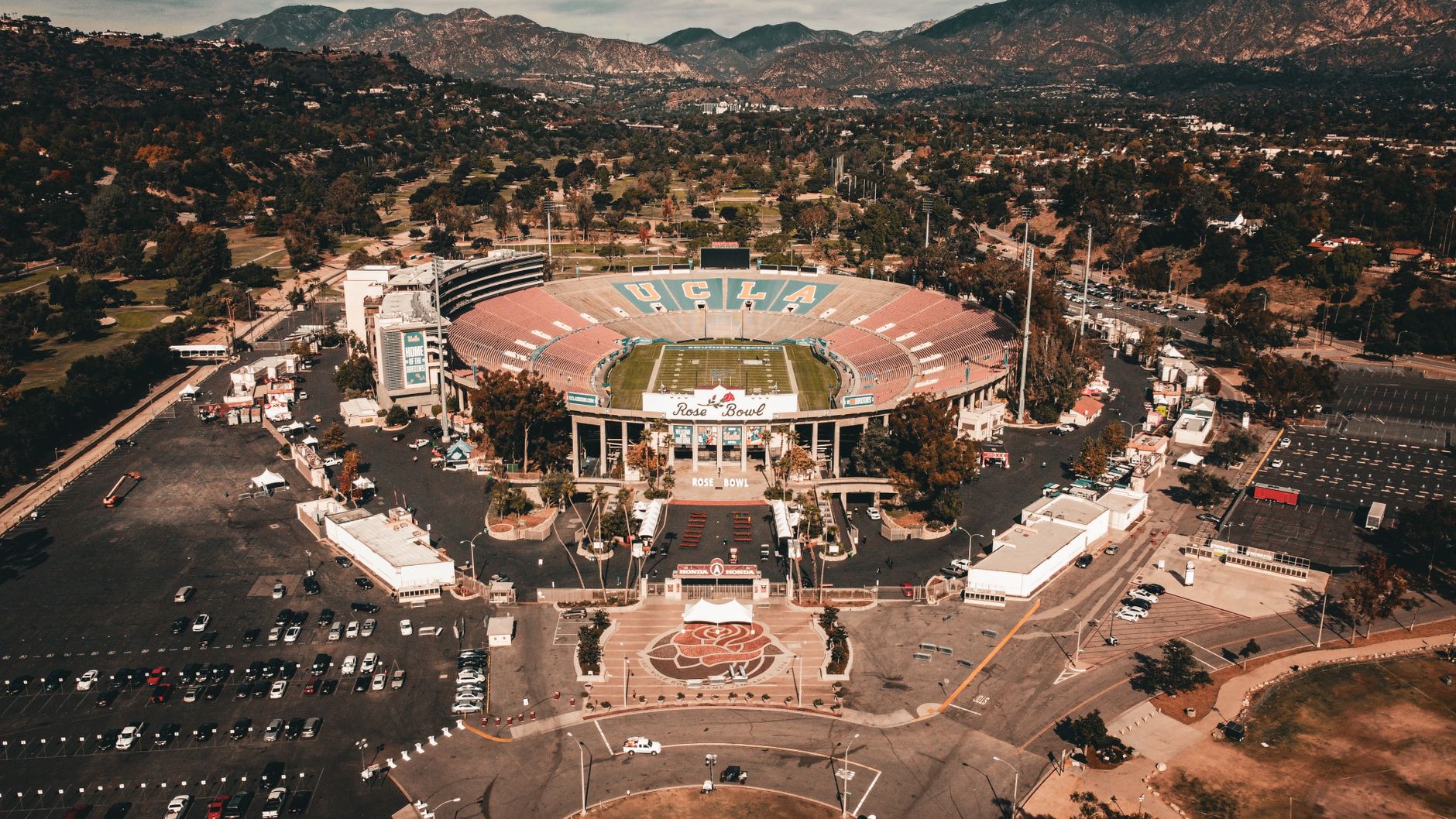
Photo by Caio Cezar on Pexels
What changed for players and teams?
For players and teams, the 2026 World Cup changes the value of squad depth, recovery planning, tactical flexibility, and travel management. The expanded competition may offer more forgiving group-stage pathways, but it also creates a longer route to the final and more demanding logistics across North America. Teams with two reliable options in each position gain a measurable advantage over squads dependent on one star.
The best tactical adjustment may be controlled rotation rather than constant intensity. A team that presses at maximum speed for every group match risks wasting energy when a draw is sufficient. Conversely, a side that protects a lead too early may surrender the goal-difference margin needed for third-place qualification. Coaches must calculate the expected value of each match state:
- When leading by one goal, defensive stability may be worth more than another attacking substitution.
- When tied late, the value of a point depends on group standings and remaining fixtures.
- When chasing goal difference, risk should rise only if elimination probability is already substantial.
- When traveling across time zones, recovery quality can matter more than a small training-ground tactical improvement.
This is where player statistics become practical. Progressive passes, defensive actions in the middle third, shot-creating actions, and ball recoveries can reveal role changes that basic goals and assists miss. A full-back who spends 70 percent of a match in the opponent’s half may create width but also expose the channel behind him. A midfielder with fewer headline numbers may be the reason the team exits pressure cleanly. Numbers are not magic; they are evidence, and evidence is preferable to shouting.
A useful information gain point is the interaction between venue and tactical style. High-altitude Mexico City conditions may affect recovery and pressing intensity differently from coastal or temperate venues in Canada. Likewise, stadium roofs, artificial surfaces, and air-conditioning systems can alter the feel of a match even when official pitch dimensions remain compliant. Before assessing a favorite, record venue-specific travel and climate factors separately rather than burying them inside a vague “home advantage” label.
Coach's Corner tracks these details through match previews, tactical breakdowns, and player-statistical comparisons. [Internal Link: advanced team tactics analysis] A prediction should explain not only who is stronger, but why that strength is likely to survive the actual match environment.
Want a more disciplined way to review the tournament picture? Use the latest analysis before relying on yesterday’s reputation.
What does the expanded tournament mean now?
The expanded tournament means fans should expect greater uncertainty in the group stage, more knockout matches, and wider variation in team quality. The 48-team format increases access for emerging football nations, but the 104-match schedule also creates more opportunities for fatigue, uneven game states, and misleading short-term form. For analysis, the central task is identifying sustainable advantages rather than guessing famous winners.
The simplest mistake is treating qualification as proof of competitiveness. A nation can reach the 2026 World Cup through a favorable confederation pathway and still face a severe tactical mismatch against a top-ranked opponent. The opposite mistake is dismissing an emerging team because it lacks historical pedigree. Morocco’s 2022 semi-final run demonstrated that defensive organization, transition quality, and tournament-specific preparation can outperform reputation over a small sample.
The second mistake is overvaluing friendly matches. Friendly substitutions, experimental formations, and controlled workloads reduce their predictive value. Competitive matches provide stronger evidence, especially when teams face comparable opponents under pressure. Coach's Corner weighs match context, starting lineups, shot quality, and tactical adjustments rather than simply counting wins.
Responsible analysis also requires responsible participation. The World Health Organization describes gambling-related harm as a public-health concern, and the National Council on Problem Gambling offers practical support resources in the United States. If you follow predictions through a gambling platform, set a fixed entertainment budget, avoid chasing losses, and never treat an analytical opinion as guaranteed income. The expected value of disciplined limits is positive; the expected value of emotional recovery betting is generally dreadful.
A sensible match-research workflow looks like this:
- Establish the baseline using rankings and competitive form.
- Adjust for injuries, suspensions, travel, altitude, and climate.
- Identify the likely formations and pressing triggers.
- Compare set-piece strength and defensive transition weakness.
- Record uncertainty instead of pretending every variable is known.
- Review the forecast after confirmed lineups, not before.

Photo by Vlad Vasnetsov on Pexels
What are three predictions for the next quarter?
The three strongest next-quarter predictions are that qualification narratives will intensify, squad-depth debates will become sharper, and venue-specific analysis will gain importance. These are not claims about the eventual champion; they are probability-based expectations for the football 2026 World Cup information cycle as teams finalize squads, schedules, and tactical plans. Anyone promising certainty this far out is selling theater.
1. Third-place qualification will dominate group-stage discussion
The eight best third-place teams advancing to the Round of 32 will make goal difference, disciplinary records, and final-day strategy unusually important. A team may prioritize avoiding a heavy defeat rather than pursuing a reckless win, particularly if its group contains one overwhelming favorite. This creates a contrarian angle: the most entertaining team is not always the team with the highest advancement probability.
2. Squad depth will separate quarter-final contenders
The longer knockout route raises the value of dependable substitutes, especially in midfield, full-back, and center-forward positions. A team with one elite creator but no replacement may decline sharply after two high-intensity matches. By contrast, a balanced squad can maintain its pressing structure and defensive spacing even when the starting lineup changes.
3. Host-region conditions will reshape pre-match models
Travel between the United States, Mexico, and Canada will prevent a single generic “North American conditions” assumption. Atlanta humidity, Mexico City altitude, Los Angeles traffic, Toronto weather, and long-haul flight timing are distinct variables. The information edge will belong to analysts who quantify those details instead of repeating that home support is valuable and then calling it a model.
These predictions should be updated as FIFA publishes confirmed match assignments, national teams announce camps, and coaches reveal tactical preferences. [Internal Link: 2026 World Cup match prediction methodology] The key is to assign probabilities, not theatrical certainty. For example, “Team A has a 58 percent chance of winning” is analytically honest; “Team A cannot lose” is merely a future apology wearing a football shirt.
See the latest tournament coverage before the next major squad announcement.
How should fans follow the football 2026 World Cup?
Fans should follow the football 2026 World Cup through a repeatable process combining official FIFA information, team news, tactical analysis, and responsible statistical interpretation. Start with confirmed schedules and squads, then monitor injuries, venue conditions, expected lineups, and recent competitive performance. Coach's Corner is designed to consolidate those daily signals into practical previews rather than recycle generic tournament hype.
A strong information routine has three layers. First, use FIFA for official match dates, competition regulations, rankings, and tournament announcements. Second, use national federation communications and reputable reporting to verify injuries and selection news. Third, use analytical sources to interpret what those facts mean tactically. Do not confuse the second and third layers: a player being listed in a squad does not prove he is fit to play 90 minutes, and a possession percentage does not automatically prove control.
Keep a personal prediction log. Record the forecast date, expected lineup, venue, tactical matchup, confidence level, and final result. After 20 or 30 predictions, calculate calibration: if you assign 70 percent confidence to outcomes that occur only 50 percent of the time, your model is overconfident. This is the sort of small operational discipline most “experts” avoid because it produces receipts. The number does not care about your reputation.
Finally, separate football enjoyment from financial risk. Set limits before reading odds, never increase stakes after a loss, and treat statistical content as analysis rather than financial advice. The 2026 World Cup will offer enough drama without manufacturing additional stress through poor decisions.
[Internal Link: responsible football prediction guide]
The conclusion is uncomplicated: the 2026 World Cup rewards preparation, context, and humility. Track the 48-team format, 104 matches, 16 host cities, travel demands, player availability, and tactical changes, then update your view when new evidence arrives. Coach's Corner provides daily match predictions, tactics, player stats, and tournament coverage for fans who prefer analysis to noise. That is a stubborn principle, yes, but it has a better expected value than blindly backing famous shirts.
Ready to follow the tournament with sharper evidence and fewer lazy assumptions?
Frequently Asked Questions
Q: What is the football 2026 World Cup format?
A: The football 2026 World Cup features 48 teams divided into 12 groups of four, followed by a Round of 32. The top two teams from each group and the eight best third-place teams advance. FIFA has scheduled 104 matches across Canada, Mexico, and the United States, making this the largest World Cup tournament by match count.
Q: When does the 2026 World Cup start and finish?
A: The 2026 World Cup begins on June 11, 2026, and concludes on July 19, 2026. The opening match will be hosted in Mexico City, while the final is scheduled for the New York-New Jersey area at MetLife Stadium in East Rutherford. Confirm local kickoff times through FIFA because North American time zones create substantial regional differences.
Q: How many host cities are involved in the football 2026 World Cup?
A: The tournament uses 16 host cities across Canada, Mexico, and the United States. Examples include Toronto, Vancouver, Mexico City, Guadalajara, Atlanta, Los Angeles, Miami, Seattle, and Dallas. The large geographic footprint makes travel distance, altitude, humidity, temperature, and recovery time relevant factors in serious match analysis.
Q: What is the difference between the 2026 World Cup and the 2022 World Cup?
A: The 2026 World Cup has 48 teams and 104 matches, while the 2022 Qatar tournament used 32 teams and 64 matches. The 2026 competition also introduces a Round of 32 and allows eight third-place teams to progress. Therefore, historical comparisons must adjust for the different qualification threshold, schedule length, and tournament geography.
Q: How should I make a football 2026 World Cup prediction?
A: Build a prediction from competitive form, expected lineups, injuries, tactical matchups, venue conditions, and opponent-adjusted statistics. Begin with recent matches, then assess pressing structure, transition defense, set pieces, and squad depth. Update the forecast after confirmed lineups, and express confidence as a probability rather than claiming certainty.
Q: Is Coach's Corner free to use?
A: Coach's Corner is a FIFA World Cup-focused content site providing daily insights on predictions, tactics, player statistics, and tournament coverage. Access conditions, available features, and any commercial services should be checked directly on the Coach's Corner website. Football analysis is not a guarantee of betting profit, so readers should set personal limits and use responsible-gambling practices.
Q: What should I do if a World Cup prediction loses?
A: Treat a losing prediction as one result in a larger sample and do not chase it with a larger wager. Review whether the original reasoning used accurate lineup, venue, injury, and tactical information, then record the outcome in a prediction log. If gambling stops feeling recreational or spending becomes difficult to control, pause immediately and contact a recognized support service such as the National Council on Problem Gambling.